A town that buried its pyramids to survive.
The name “Tlalancaleca” comes from the Nahuatl words for earth, below, and house — “houses under the ground.”
When the Spanish arrived in 1520, the indigenous population of what is now San Matías Tlalancaleca, Puebla, buried their pyramids to protect them from destruction.
It worked. 500 years later, researchers from Tulane University and UDLAP excavated 40+ pyramidal platforms — publishing their findings in Antiquity and Radiocarbon (Cambridge University Press, 2017 & 2025).
The site predates Teotihuacan. At its peak it covered 500+ hectares. Its population, after the eruption of Popocátepetl in the 1st century AD, migrated to the Teotihuacan valley — carrying their urban knowledge with them.
And yet almost no one knows this place exists.
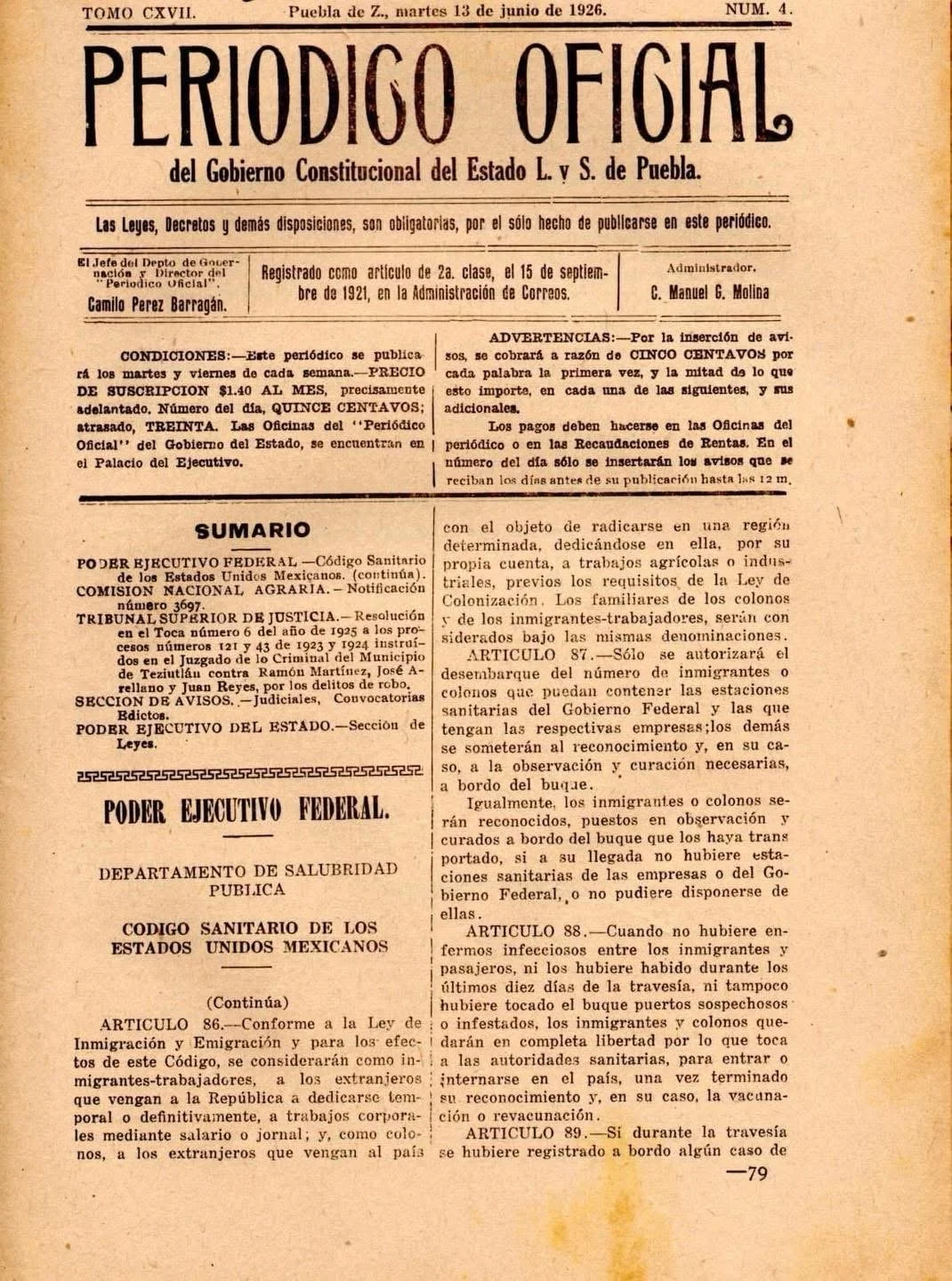
In 1550 the Tlalancaleca Codex, written in Nahuatl, documented the town’s founding. On April 15, 1926 — exactly 100 years ago — it became a Free Municipality.
Some histories don’t disappear. They wait underground.
📍 San Matías Tlalancaleca, Puebla, México
🔗 https://www.cambridge.org/core/journals/antiquity/article/abs/development-of-an-early-city-in-central-mexico-the-tlalancaleca-archaeological-project/050CFB8C2C427628C896B560C318AE43
#Archaeology #AncientHistory #Mesoamerica #Mexico #Teotihuacan #Tlalancaleca #Heritage #Puebla #Leadership